A CRM designed around people and the work behind the data
A more humane CRM for nonprofit caseworkers balancing operational detail with relationship-driven work, from intake to follow-up.
- Client
- b.combs
- Year
- 2025
- Role
- Product designer
- Duration
- 5 months
- Team
- 2 engineers, 1 program director
- Research
- Information architecture
- UI design
- Prototyping
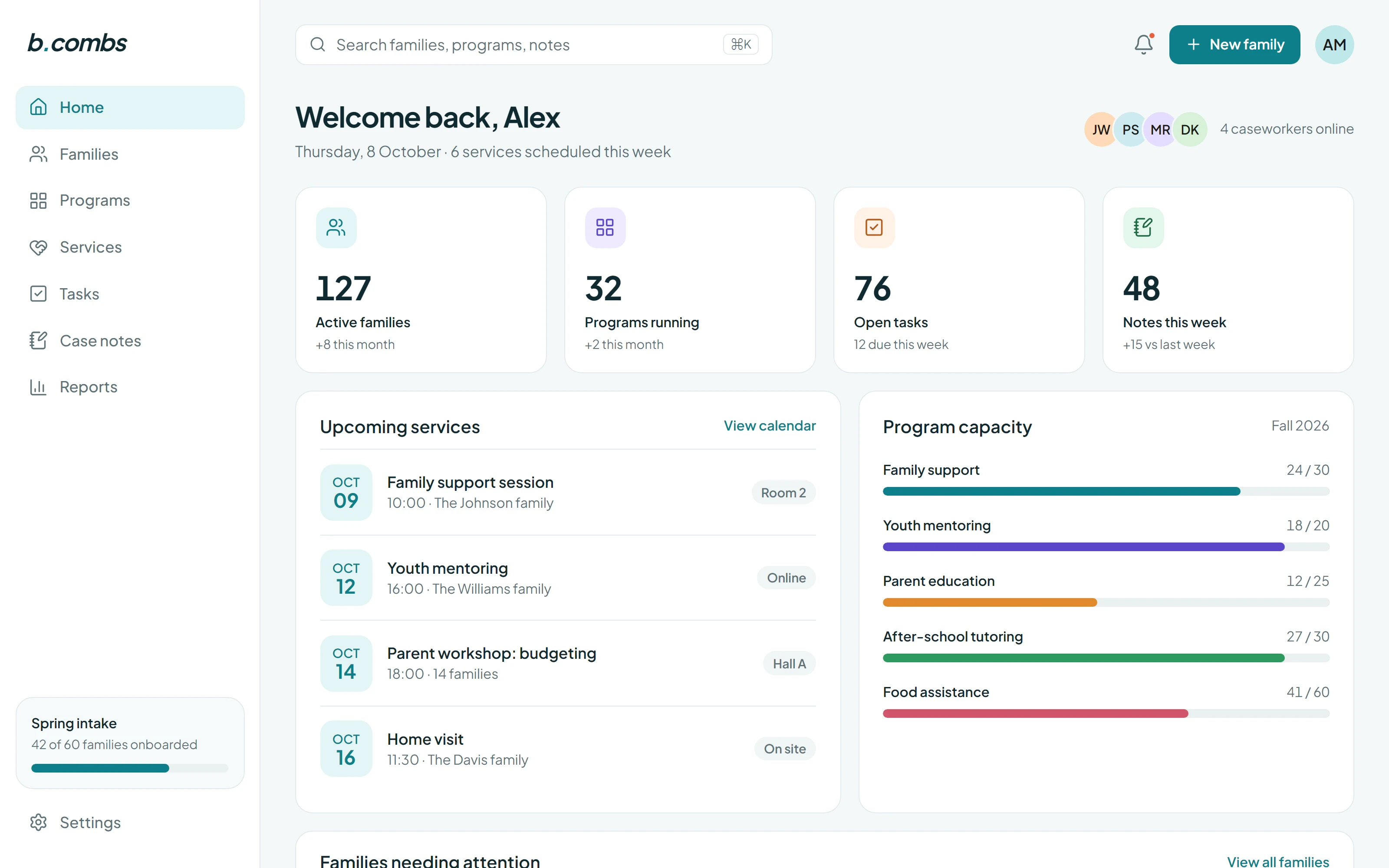
Caseworkers at b.combs support families through food assistance, tutoring, and parent education. Their old CRM treated every family as a row in a spreadsheet, and it showed in how hard the tool was to use.
The problem
The team was spending more time keeping records current than talking to families. Three things kept coming up in field visits and diary studies:
- Notes, services, and tasks lived on separate screens with no shared context.
- Nobody could see at a glance which families had gone quiet.
- New caseworkers needed weeks of training before they felt confident.
What I did
I shadowed six caseworkers over two weeks and mapped every task they did in a typical day. Most of the work clustered around one question: what does this family need from me next?
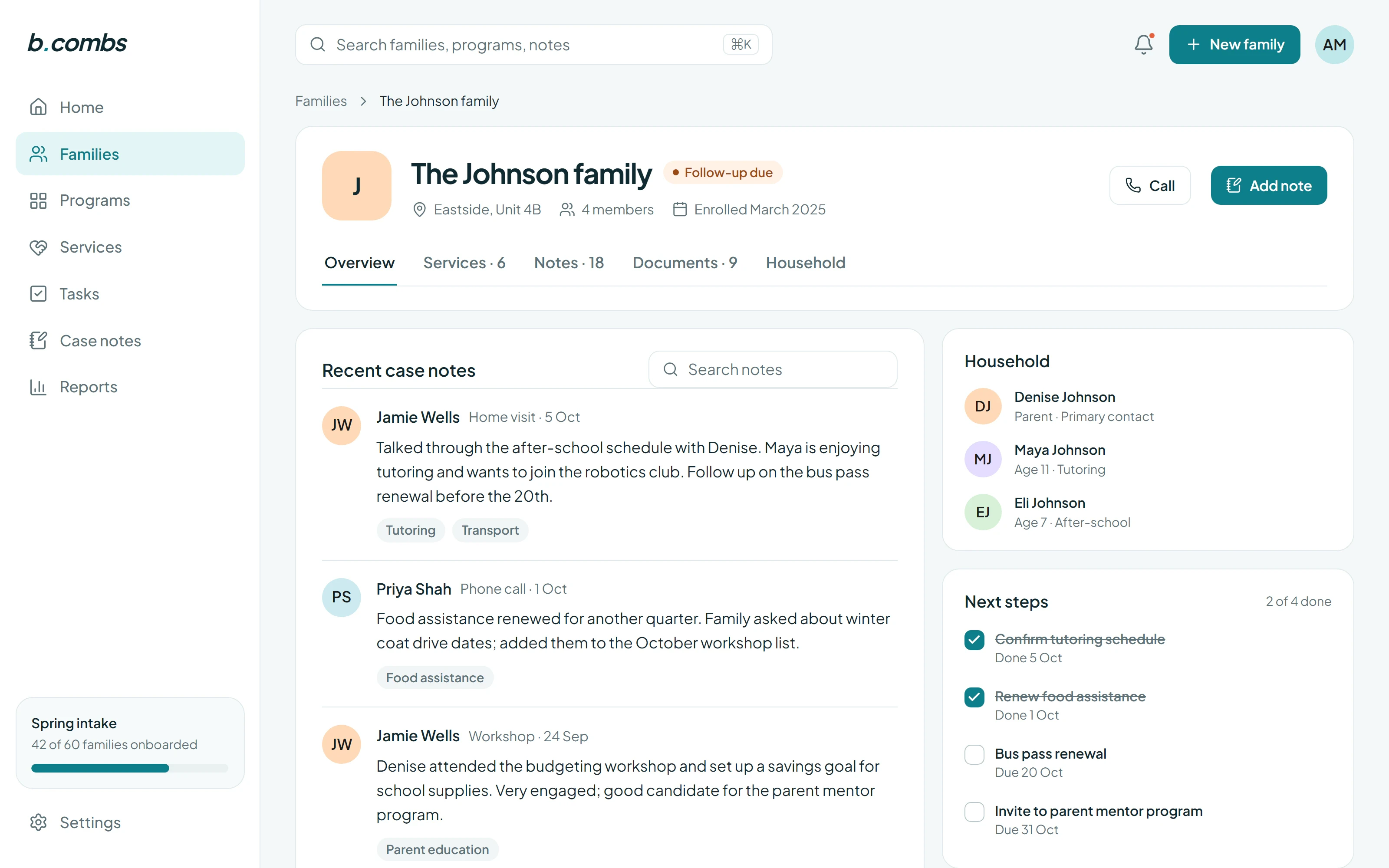
That became the organizing idea. The home screen leads with upcoming services and the families who need attention, and each family has a single profile where notes, household members, programs, and next steps sit side by side.
Key decisions
People before records. Family names, faces, and the caseworker relationship lead every screen. Program codes and IDs moved into the background.
Attention is a status, not a report. “Follow-up due” is calculated from the last contact and shown wherever a family appears, instead of being buried in a monthly export.
Notes stay human. Case notes are written in plain language with light tags, so they read like a conversation history rather than a form.
Outcome
- less time spent on record keeping
- 45%
- to onboard a new caseworker, down from three weeks
- 3 days
- families missed in the spring intake
- 0
The redesign launched with the fall programs. Caseworkers stopped asking for training sessions, and the program team now uses the capacity view to plan intake each season.